OEM vs ODM: Which Do You Need?
OEM means you buy our existing product and put your brand on it - your logo, your box, your colour card. It is the fastest route to market and the lowest MOQ.
ODM goes further: you specify the product itself - texture mix, weight per piece, length range, bundle construction - and we develop it to your spec. It costs more in development time and gives you a range no competitor is selling.
Most successful private-label launches start with OEM to validate demand, then move their best sellers to ODM in year two.
The Customization Process, Step by Step
- Brief and feasibility. Send your target market, price band, intended specs and packaging direction. We confirm what is manufacturable in-house and what needs external sourcing.
- Sample and shade selection. You receive physical samples plus a shade ring. Choose your colour range - for most markets, 6-10 shades covering natural black through mid brown to blonde is the practical core.
- Packaging and artwork. Logo, box structure, insert cards, barcode and labelling. Our designers produce print-ready artwork and, if you want, we produce the physical cartons in-house so you are not chasing multiple suppliers.
- Production and QC. Your batch is sorted to your grade and weight spec, then checked for tangling, shedding, length consistency and colour matching before packing. Third-party inspection is welcome and we support it.
- Labelling and packing. Barcode, country of origin, fibre content and care labels are applied, and units are packed to your carton dimensions with your declared carton marks.
- Shipping and handover. Consolidated shipment with your own cartons, packing list and shipping documents, ready for your freight forwarder.
MOQ, Lead Time and Cost
Tooling and packaging set-up means OEM starts at a modest order quantity per SKU, typically tens of pieces, while ODM needs enough volume to justify a new production run - usually hundreds. Sampling to bulk production commonly runs 20-35 days depending on the construction and the order size, plus shipping. Every step can be quoted separately so you can see exactly what your branding costs.
Common Mistakes to Avoid
- Over-ordering colours. Demand for 20 shades is rare; depth in 5-8 proven shades is cheaper and turns faster.
- Skipping the physical sample. Screens lie about tone and texture - always approve a real weft.
- Forgetting label compliance. Fibre content, country of origin and care instructions are required in most destination markets.
- Not planning a reorder path. Agree the specification in writing so reorders are identical.
RAYLI HAIR is a Qingdao-based manufacturer running OEM and ODM programmes for salons, distributors and online brands in more than 30 countries, with 100% human hair and private-label packaging from one factory.
Start a private-label discussion - send your brief and we will come back with feasibility, MOQ and a step-by-step quotation.
Start Your Private Label With Us
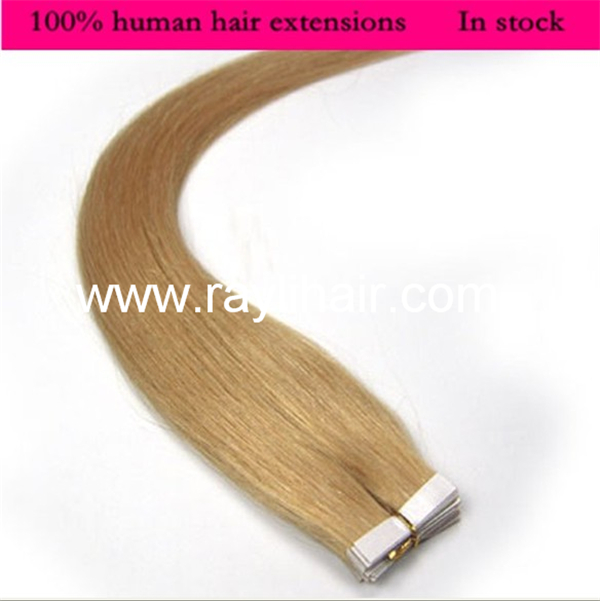
Private label starts with the base product and the packaging. Our best-selling bases for private label are clip-in hair extensions, tape-in wefts and I-tip pre-bonded hair, all of which can be produced with your logo, label design and shade ring. Send us your specification and packaging reference and we will quote sample and bulk pricing.
Contact our OEM team to discuss MOQ, sample lead time and production schedule.
Related: private label quality depends entirely on the base hair you specify, so our guide to hair grades and draw ratio is worth reading before you fix a price point for your brand.
Related reading: Custom Packaging & Hang Tags for Private Label Hair Extensions — what you can print on your own box, tag, and insert.